Learn More About Our Services
Our oral surgery practice offers a comprehensive range of services to address various dental and maxillofacial needs. Whether you require dental extractions, wisdom teeth removal, or pre-prosthetic surgery, we aim to provide safe and comfortable care with options for local anesthesia and IV sedation. We also specialize in dental implants, bone grafting, and full arch restoration, ensuring the best outcomes for tooth replacement and oral health. Additionally, our expertise extends to managing canine exposure, treating oral pathology, and handling facial trauma, with a focus on restoring function and aesthetics. Our team is dedicated to delivering personalized care and precise surgical interventions for optimal patient outcomes.



Dental Extraction
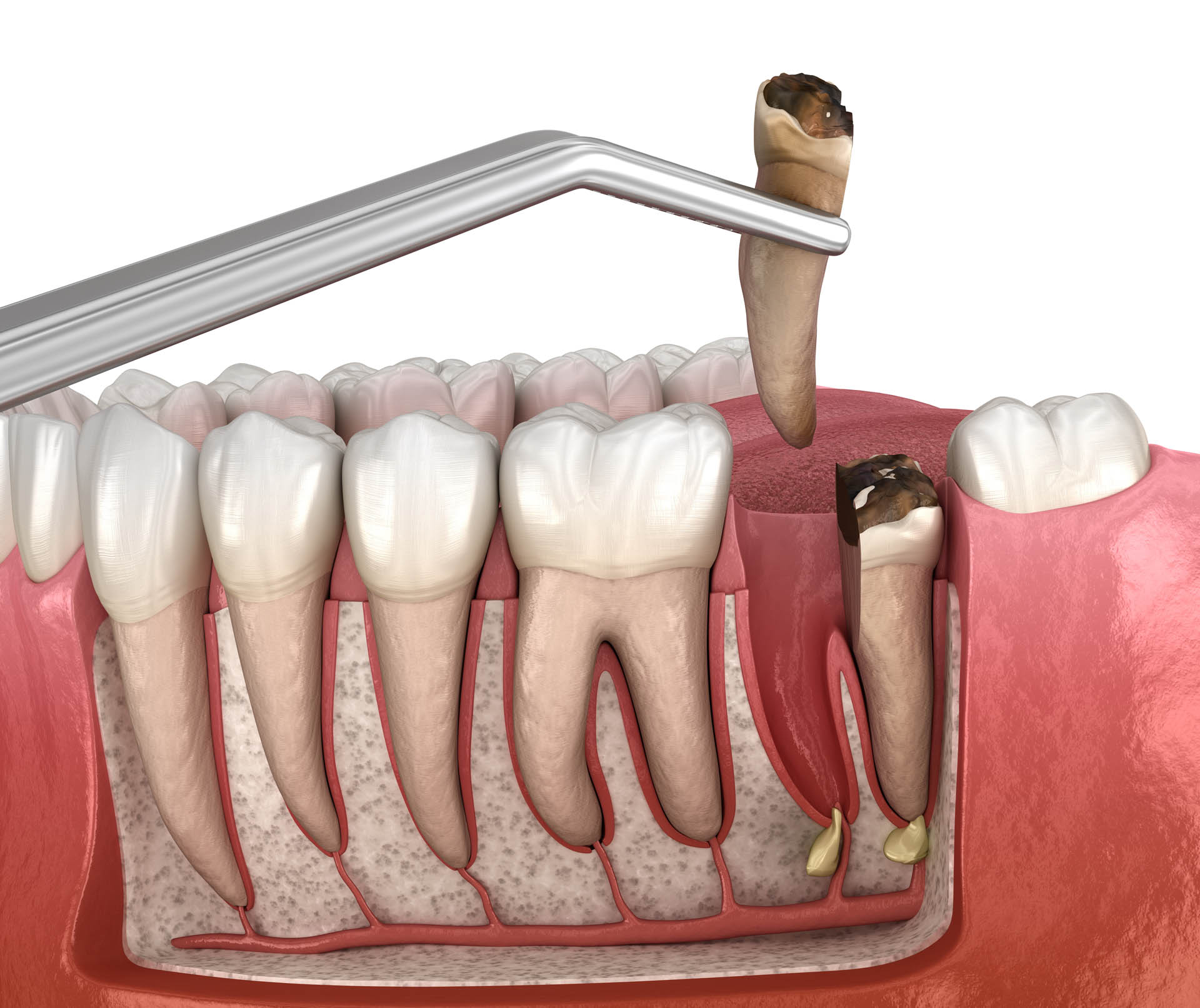
Reasons teeth may need to be extracted.
- Non restorable due to a cavity or fracture
- Impaction
- Gum Disease or bone loss
- Crowding
Our goal is to provide this service in a safe and comfortable environment. We offer both local anesthesia and IV sedation.
Canine Exposure
Canine teeth are crucial to your overall function when eating. They are located in the top and bottom jaw, adjacent to your four front teeth. Sometimes these teeth will not erupt properly leaving them impacted in bone. This could be due to lack of space, retained baby teeth or even a cyst/tumor that is impeding its eruption. Bringing the impacted canine into the proper position can help improve the function and aesthetics of your smile.To help facilitate its eruption, an oral surgeon will work with your orthodontist to help expose and facilitate its eruption into the correct place. The oral surgeon will surgically expose the canine and attach a chain to the tooth. The orthodontist will then use that chain to help guide that tooth into the correct position.
Oral Pathology
Your dentist may refer you to an oral surgeon when they see unusual changes with the tissue in your mouth. This could be red or white spots, a growth, or sores that fail to heal. If pathology is suspected, the oral surgeon may remove and biopsy the area to get a diagnosis.
Facial Trauma
Trauma to the oral and facial area can happen from various incidents including accidents, falls, sports injuries, assaults or other traumatic events. Oral and maxillofacial surgeons are trained to manage and treat these injuries. Treatment for facial injuries are specific in nature with the overall goal to restore form, function and aesthetics.
These services include:
- Facial fracture management
- Soft tissue injury management
- Dental trauma
- Maxillofacial Reconstruction

Orthognathic Surgery
Orthognathic surgery is also known as jaw surgery. This could include your upper jaw or lower jaw. Orthognathic surgery is performed to help correct functional and aesthetic issues due various abnormalities or misalignments of the jaws. This is done in collaboration with the patients orthodontist who will help align the teeth in the proper position prior to surgery. Surgery may be performed on the upper jaw (maxilla), lower jaw (mandible) or both.
Common reasons to perform orthographic surgery:
- Malocclusion: misalignment of the upper and lower jaws resulting in overbite, underbite or cross bite. This can cause difficulty with chewing and speaking
- Facial Asymmetry
- Obstructive Sleep Apnea: Orthognathic surgery may be recommended to help improve a patients airway function.
TMJ Disorders
The temporomandibular joint know as your TMJ allows your mouth to move both up and down and side to side. When the TMJ is in its proper position, regular functions such as chewing and speaking can occur without discomfort. Many problems with your TMJ can be treated conservatively by your general dentist. Once these conservative treatments have failed, your general dentist may refer you to and oral surgeon.
Along with a detailed exam at your consultation, imaging such as a CBCT or MRI may be recommended to help in the correct diagnosis. Depending on the diagnosis, there are several different treatments that may be offered.
Anesthesia and Pain Relief
Pending on the patients level of comfort and medical history, surgery at our office is either performed with local anesthesia or IV sedation.
Local anesthesia: With local anesthesia, you will be fully awake but you should not feel any pain. After receiving topical numbing medication, you will receive an injection that will numb the area where surgery is being performed.
IV Sedation: Having an oral surgery procedure done can be intimidating and scary for certain individuals. To help we offer IV sedation which allows the patient to be asleep during the procedure.